How to Start a Nonprofit Without Money: Your Ultimate Guide
start a nonprofit without money

How to Start a Nonprofit Without Money: Your Ultimate Guide

Launch your mission-driven organization with minimal financial resources and maximize your impact.

Begin Your Mission

Key Takeaways

  • ✓ You don't need significant upfront capital to begin a nonprofit.
  • ✓ Leveraging community support and in-kind donations is crucial.
  • ✓ Focus on building a strong mission and network before formal incorporation.
  • ✓ Strategic planning and resourcefulness are more valuable than large budgets initially.

How It Works

1
Define Your Mission & Vision

Clearly articulate what problem your nonprofit will solve and what impact you aim to achieve. This foundational step guides all future efforts and attracts initial support.

2
Build Your Core Team & Network

Recruit passionate volunteers who share your vision and can contribute diverse skills. A strong network of advocates and potential partners is invaluable for resource-limited beginnings.

3
Operate as a Grassroots Initiative

Before formal incorporation, focus on delivering your mission through informal community actions and projects. This builds credibility and demonstrates impact without immediate legal costs.

4
Secure Initial Resources & Funding

Utilize in-kind donations, small community fundraisers, and fiscal sponsorship to generate initial operating funds. This allows you to grow and eventually pursue formal 501(c)(3) status.

Laying the Groundwork: Vision, Mission, and Community Engagement
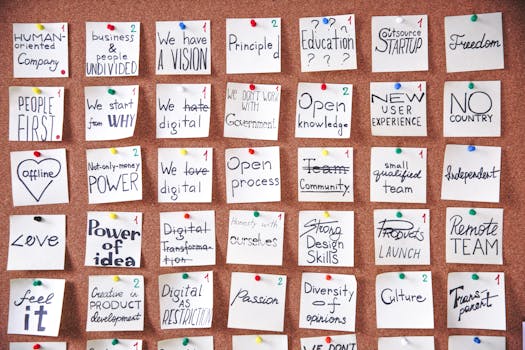
A corkboard with motivational sticky notes, ideal for planning and creativity. Photo: Polina Zimmerman / Pexels
The dream of making a significant positive impact on the world often begins with a powerful idea, not a hefty bank account. Many aspiring changemakers are deterred by the perceived financial barriers to establishing a nonprofit. However, the reality is that you absolutely can start a nonprofit without money, or at least with very minimal personal investment. The key lies in strategic planning, leveraging community assets, and understanding the phased approach to nonprofit development. Before you even think about legal paperwork or fundraising, the most critical step is to crystalize your vision and mission. What specific problem are you trying to solve? Who are the beneficiaries of your work? What unique solution or approach will your organization bring to the table? A clear, compelling mission statement acts as your North Star, guiding every decision and attracting like-minded individuals and potential supporters. This initial phase requires deep reflection and research, not capital. Once your mission is clear, begin to identify and engage your target community. This isn't about asking for money; it's about listening, understanding needs, and building relationships. Attend local community meetings, volunteer for existing organizations, and talk to the people you aim to serve. This grassroots engagement not only validates your mission but also helps you identify potential volunteers, advocates, and even future board members who are passionate about the cause. These early connections are invaluable, forming the human capital that will drive your organization forward. Think of it as building your social currency – a network of trust and shared purpose that is far more potent than any initial cash injection. Furthermore, consider what resources already exist within your community that you can tap into. Are there community centers willing to offer free meeting space? Local businesses that might donate supplies or services? Universities with students eager to volunteer their skills for a good cause? These in-kind contributions are the lifeblood of a bootstrapped nonprofit. By demonstrating resourcefulness and a strong commitment to your mission, you begin to build a reputation that attracts further support. Remember, a nonprofit's strength isn't measured by its starting budget, but by the depth of its commitment and the breadth of its community support. For more insights on building a strong foundation, explore resources on nonprofit strategic planning.

Building Your Team and Operating Lean: The Power of Volunteers and In-Kind Support
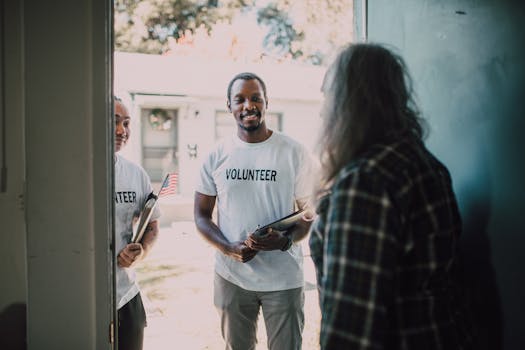
Two diverse volunteers, holding documents, visit a home to offer community support and services. Photo: RDNE Stock project / Pexels
One of the most significant assets for any aspiring nonprofit, especially one operating without initial funds, is its people. A passionate and dedicated volunteer team can accomplish wonders that a small budget simply cannot. Your first task is to identify individuals who resonate with your mission and are willing to contribute their time, skills, and expertise pro bono. This could include friends, family, colleagues, or members of your target community. Look for a diverse skill set: someone with administrative experience, a person good at social media, a community organizer, or even someone with legal or accounting knowledge who might offer pro bono advice. These individuals form your initial 'working group' or informal advisory committee, providing the human power necessary to get your initiatives off the ground. Operating lean means being incredibly resourceful and creative with every aspect of your work. Instead of renting office space, utilize free public spaces like libraries, community centers, or even coffee shops for meetings. For communication, leverage free online tools like Google Workspace for email and document sharing, Slack for team communication, and Zoom for virtual meetings. Social media platforms offer free avenues for outreach and awareness. When it comes to supplies or services, always think about in-kind donations. Can a local printer offer discounted or free printing for your flyers? Can a graphic designer create your logo pro bono? Can a local restaurant donate food for a community event? Many businesses are eager to support local causes, especially when they see a genuine, impactful effort. Demonstrating your impact through tangible actions, even small ones, is crucial. Start with pilot projects or small-scale initiatives that require minimal resources but generate visible results. For instance, if your mission is environmental, organize a community clean-up. If it's about education, offer free tutoring sessions. These early successes build credibility, attract more volunteers, and make a compelling case for future support. Document everything – photos, testimonials, attendance numbers – to showcase your progress. This portfolio of impact becomes your most powerful fundraising tool, proving that your organization can deliver on its promise even without a large budget. Remember, people fund impact, not just ideas. Your ability to show tangible results, even on a shoestring, will open doors to greater opportunities.

Navigating Legalities and Funding Pathways: Fiscal Sponsorship and Grant Readiness

Magnifying glass focusing on terms and conditions document on wooden surface. Photo: RDNE Stock project / Pexels
While you can certainly start doing good work without formal incorporation, to truly scale your impact and access larger funding opportunities, you will eventually need to establish legal nonprofit status, specifically 501(c)(3) status in the US. However, the process of applying for 501(c)(3) status can be complex and involve legal fees, which is precisely what we're trying to avoid in the initial stages. This is where fiscal sponsorship becomes an invaluable tool for organizations looking to start a nonprofit without money. Fiscal sponsorship allows your project to operate under the legal and tax-exempt umbrella of an existing 501(c)(3) organization. This means that donors can make tax-deductible contributions to your project through the fiscal sponsor, even though your project itself is not yet formally incorporated. The fiscal sponsor typically handles administrative tasks, financial management, and compliance, allowing your team to focus on program delivery. While fiscal sponsors usually charge an administrative fee (often 5-10% of funds raised), this is often far less expensive than the legal fees and ongoing administrative burden of establishing your own 501(c)(3) from scratch. It provides a bridge, allowing you to raise funds, build a track record, and demonstrate sustainability before committing to the full incorporation process. Research organizations like the National Network of Fiscal Sponsors to find potential partners. Even without 501(c)(3) status, you can begin preparing for future grant applications. Many small, local grants or corporate giving programs might support community initiatives that don't yet have formal status, especially if they are fiscally sponsored. Start by clearly articulating your program goals, anticipated outcomes, and how you will measure success. Develop a detailed budget, even if it's based on in-kind contributions and volunteer hours – this demonstrates financial planning. Building a strong narrative around your impact and needs is crucial. When you do eventually apply for grants, having a history of successful, impactful projects, even small ones, will significantly strengthen your application. This readiness involves meticulous record-keeping, clear communication of your mission, and a demonstrated ability to execute on your promises. For more on structuring your organization, consider resources on nonprofit governance.

Sustainable Growth: Fundraising Strategies and Common Pitfalls to Avoid

A close-up of a person wearing a volunteer shirt with arms crossed, promoting community service. Photo: RDNE Stock project / Pexels
Once your nonprofit has established a track record of impact and perhaps secured fiscal sponsorship, the next challenge is to develop sustainable funding strategies that don't rely on a large initial investment. Diversifying your funding streams is paramount. Beyond traditional grants, consider community-based fundraising events that are low-cost to organize but high-impact in terms of engagement and awareness. Think bake sales, charity walks, online crowdfunding campaigns, or partnerships with local businesses for 'give-back' nights. These events not only raise modest funds but also build your community of supporters. Another powerful strategy is to cultivate individual donors. Start with those who have already shown interest or volunteered. Personal appeals, sharing your story, and demonstrating the direct impact of their contribution can be incredibly effective. Even small, recurring donations can add up over time and provide a stable base of support. Leverage social media and email newsletters to share success stories and maintain engagement with your growing supporter base. Transparency about your finances and impact will build trust and encourage continued giving. **Common Pitfalls to Avoid When Starting a Nonprofit Without Money:** * **Lack of Clear Mission:** Without a focused purpose, efforts become scattered and ineffective. * **Burnout:** Relying solely on a small group of volunteers can lead to exhaustion. Delegate and empower others. * **Ignoring Legalities:** While you can start informally, eventually you'll need to address legal structure. Don't put it off indefinitely. * **Poor Record-Keeping:** Document everything – finances, volunteer hours, impact metrics. This is vital for credibility and future funding. * **Trying to Do Too Much:** Start small, prove your concept, and then scale. Don't overpromise and underdeliver. * **Failing to Network:** Your network is your net worth. Build relationships with other nonprofits, community leaders, and potential donors. * **Not Asking for Help:** People want to support good causes. Don't be afraid to ask for donations, in-kind support, or volunteer time. By avoiding these common mistakes and focusing on building a strong foundation of community support and demonstrated impact, your nonprofit can grow from a passion project into a sustainable force for good, even without a large initial budget.

Comparison

FeatureGrassroots Initiative (No Money)Fiscal SponsorshipFull 501(c)(3) Incorporation
Start-up CostMinimal to noneLow (admin fees)High (legal, filing fees)
Tax-Deductible DonationsNo (unless through individual)Yes (through sponsor)Yes
Legal StatusInformal groupProject under sponsor's 501(c)(3)Independent 501(c)(3)
Administrative BurdenLow (self-managed)Low (managed by sponsor)High (self-managed)
Access to GrantsLimited (small local)Moderate to HighHigh
Control & AutonomyFullShared with sponsorFull

What Readers Say

"This guide was a lifesaver for our community garden project. We started with literally zero budget, and the advice on leveraging volunteers and in-kind donations helped us get our first beds planted and harvested. It showed us how to start a nonprofit without money effectively."

Maria S. · Austin, TX

"I thought I needed thousands to even begin. This article broke down the process into manageable, no-cost steps. The section on fiscal sponsorship was particularly enlightening and gave us a clear pathway forward to start a nonprofit without money."

David L. · Portland, OR

"Our youth mentorship program launched successfully thanks to these strategies. We focused on building a strong volunteer base and demonstrating impact, which led to our first small grant. This resource truly empowered us to start a nonprofit without money and make a difference."

Sarah K. · Miami, FL

"While challenging, the emphasis on community engagement and lean operations was spot on. It required a lot of personal effort, but the framework provided here made it feel achievable to start a nonprofit without money. We're now fiscally sponsored and growing."

Jamal R. · Chicago, IL

"As a student, I wanted to address food waste on campus. This guide gave me the practical steps to organize a food recovery initiative with no budget. It's amazing what you can achieve when you know how to start a nonprofit without money."

Emily P. · Denver, CO

Frequently Asked Questions

What is the absolute minimum I need to start a nonprofit without money?

The absolute minimum you need is a clear mission, a passionate individual or small group, and a willingness to leverage community resources and volunteer time. You can begin by organizing informal community activities and building a network of support before incurring any significant costs.

Can I accept donations if I'm not a registered 501(c)(3)?

Yes, you can accept donations, but they will not be tax-deductible for the donor unless you are operating under a fiscal sponsor's 501(c)(3) status. For individual donations, you can accept them as a private entity, but donors won't receive a tax write-off.

How do I find a fiscal sponsor for my project?

You can search online directories like the National Network of Fiscal Sponsors or inquire with established nonprofits in your field or community. Look for organizations whose mission aligns with yours and who have a track record of successful fiscal sponsorship.

What are the hidden costs of starting a nonprofit that I should be aware of?

Even without money, there are 'hidden costs' in terms of time and effort. Later, when pursuing 501(c)(3) status, you'll encounter filing fees (IRS Form 1023), state incorporation fees, and potentially legal or accounting assistance fees. Fiscal sponsorship helps defer these.

Is it better to start as an informal group or immediately seek fiscal sponsorship?

It's often best to start as an informal group to test your ideas, build community support, and demonstrate initial impact. Once you have a clear program and some momentum, seeking fiscal sponsorship becomes a strategic next step to access tax-deductible donations and grants.

Who should consider starting a nonprofit without money?

Anyone with a strong passion for a cause, a clear vision for change, and a willingness to be resourceful and community-driven should consider this path. It's ideal for grassroots organizers, community leaders, and individuals who want to make an immediate impact without financial barriers.

What are the legal risks of operating an informal nonprofit?

Operating informally means you lack legal protection for your personal assets, cannot offer tax deductions, and may face limitations in fundraising. It's suitable for initial, small-scale activities, but formalizing or using fiscal sponsorship becomes crucial as you grow to mitigate these risks.

How can technology help me start a nonprofit with no budget?

Leverage free or low-cost technology for communication (Google Workspace, Slack), social media marketing (Facebook, Instagram, X), website building (WordPress.com, Wix free tiers), and basic project management. Many platforms offer nonprofit discounts or free versions for small groups.

Don't let perceived financial barriers stop you from making a difference. This comprehensive guide has shown you how to start a nonprofit without money, focusing on resourcefulness, community engagement, and strategic growth. Take the first step today and turn your passion into impactful action.

Topics: start a nonprofit without moneylaunch nonprofit low budgetnonprofit startup fundinggrassroots nonprofitcommunity organizing without funds
Leo List
Brampton weed
Adultwork