
Mastering Nonprofit Grant Writing Tips for Funding Success
nonprofit grant writing tips

Mastering Nonprofit Grant Writing Tips for Funding Success

Transform your organization's potential with expert strategies for securing crucial grant funding.

Start Your Grant Journey

Key Takeaways

  • ✓ Grant funding is a competitive but vital revenue stream for most nonprofits.
  • ✓ A well-researched and compelling narrative is critical for successful grant applications.
  • ✓ Understanding funder priorities and guidelines is paramount to tailoring your proposal.
  • ✓ Building relationships with grantmakers can significantly increase your chances of success.

How It Works

1
Research & Identify Funders

Pinpoint foundations and government agencies whose missions align with your nonprofit's work. Utilize databases and networking to find suitable opportunities.

2
Develop a Compelling Project

Clearly define your project's goals, activities, and expected outcomes. Ensure it addresses a clear community need and demonstrates measurable impact.

3
Craft a Persuasive Proposal

Write a clear, concise, and compelling narrative that adheres strictly to funder guidelines. Highlight your organization's capacity and the project's sustainability.

4
Submit, Steward, & Report

Submit your application on time, then cultivate relationships with funders. If awarded, meticulously manage funds and provide thorough, timely reports.

The Foundation of Successful Grant Writing: Research and Readiness

Close-up of a magnifying glass over financial data charts and metrics on printed paper. Photo: RDNE Stock project / Pexels
Securing grant funding for your nonprofit is less about luck and more about meticulous preparation and strategic execution. Before you even begin to draft a proposal, the groundwork you lay will determine the trajectory of your success. This initial phase, often overlooked in its critical importance, involves deep dives into both your organization's readiness and the landscape of potential funders. It's about understanding not just what you need, but what others are willing to give, and why. First, assess your organizational readiness. Grantmakers invest in stable, well-managed organizations with a clear mission and demonstrated impact. Do you have a strong strategic plan? Is your financial house in order with up-to-date audits and budgets? Are your programs well-defined, with clear objectives, activities, and measurable outcomes? Funders want to see that their investment will be managed responsibly and yield tangible results. This internal audit is crucial. Without a solid operational foundation, even the most compelling project idea can fall flat. Consider developing a nonprofit strategic plan to guide your efforts. Next, dive into funder research. This is not a passive activity; it requires active investigation. Utilize online databases such as Foundation Directory Online, GrantStation, or government grant portals like Grants.gov. Look beyond the surface-level descriptions. What are their stated priorities? What types of projects have they funded in the past? What is their average grant size? Are there geographic restrictions? Pay close attention to their mission and values – a strong alignment here is non-negotiable. Don't waste time applying to funders whose interests don't perfectly match your project. Beyond databases, network with other nonprofits, attend grant workshops, and even review annual reports of foundations. Often, the best insights come from understanding who they've funded and why. Look for patterns, common themes, and specific language they use to describe their philanthropic goals. This detailed research allows you to create a targeted list of potential funders, significantly increasing your chances of success. Remember, a shotgun approach to grant writing is rarely effective; a sniper approach, where each application is tailored to a specific funder, yields far better results. This initial investment of time in research and internal assessment will save countless hours in writing misdirected proposals and ultimately lead to more successful funding outcomes.

Crafting a Compelling Narrative: The Art of Persuasion in Grant Proposals
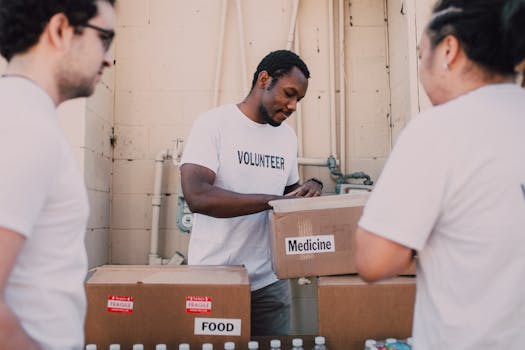
Volunteers packing food and medicine boxes for donation. Community service and support efforts. Photo: RDNE Stock project / Pexels
Once you've identified suitable funders and assessed your organization's readiness, the real work of crafting a grant proposal begins. This is where you translate your organization's passion and purpose into a persuasive narrative that resonates with grantmakers. A successful grant proposal isn't just a request for money; it's a compelling story that outlines a significant problem, presents a viable solution, and demonstrates your organization's unique capacity to deliver that solution effectively. Start with a powerful problem statement. This section sets the stage, clearly articulating the need your project addresses. Use data, statistics, and compelling anecdotes to illustrate the severity and scope of the problem. Avoid jargon and ensure the problem is framed in a way that is relevant to the funder's priorities. Remember, funders want to support solutions to pressing issues, so make the problem undeniable and urgent. Following the problem, present your proposed solution – your project. Detail your project's goals, objectives, activities, and expected outcomes. Goals are broad statements of what you want to achieve (e.g., "Improve community health"). Objectives are specific, measurable, achievable, relevant, and time-bound (SMART) steps towards those goals (e.g., "By December 2024, 80% of participants will report increased access to healthy food options"). Clearly outline the specific activities you will undertake to achieve these objectives. This section needs to be logical, well-structured, and demonstrate a clear path from intervention to impact. Crucially, articulate your organization's capacity and expertise. Why is your nonprofit the best entity to carry out this project? Highlight your track record, the qualifications of your staff, your community partnerships, and any unique assets you possess. Provide evidence of past successes and demonstrate a deep understanding of the community you serve. Funders are investing in your ability to deliver, so showcase your strengths. Finally, address sustainability and evaluation. How will the project continue after the grant period ends? What is your long-term vision? Funders are increasingly interested in projects that build lasting change. Equally important is your evaluation plan. How will you measure success? What metrics will you use? How will you collect and analyze data? A robust evaluation plan demonstrates accountability and a commitment to continuous improvement. A well-crafted narrative weaves these elements together seamlessly, creating a powerful case for support that leaves no doubt about your project's potential and your organization's capability.

Navigating the Application Process and Building Funder Relationships

Three volunteers organizing donation boxes with clothes and food items in a community center. Photo: Gustavo Fring / Pexels
Submitting a grant proposal is merely one step in a much larger dance between your nonprofit and potential funders. The application process itself requires meticulous attention to detail, while the cultivation of relationships can be the single most impactful factor in long-term funding success. Understanding both aspects is crucial for any organization seeking sustained support. First, strict adherence to guidelines is non-negotiable. Funders receive hundreds, if not thousands, of applications. Any deviation from their specific instructions – page limits, font sizes, required attachments, or submission formats – can lead to immediate disqualification. Treat the guidelines as a sacred text. Create a checklist and double-check every requirement before submission. This demonstrates professionalism and respect for the funder's process. Proofread your entire application multiple times for grammar, spelling, and clarity. A sloppy application reflects poorly on your organization's attention to detail and overall capacity. Beyond the written application, consider the importance of building relationships. While many foundations have strict no-contact policies before submission, others welcome preliminary inquiries or letters of intent. If permitted, take the opportunity to connect. A brief, well-researched conversation can provide invaluable insights into a funder's current priorities, help you refine your proposal, and even put a face to your organization. Even if direct contact isn't possible, attending webinars, reviewing their communication, and understanding their broader philanthropic goals can help you tailor your approach. Post-submission, the work isn't over. If your proposal is declined, don't be discouraged. Politely request feedback. This feedback is gold, providing insights into areas for improvement for future applications. If your proposal is accepted, the relationship-building truly intensifies. Grant stewardship is about more than just spending the money; it's about demonstrating impact, transparency, and gratitude. Provide timely and thorough reports, communicate challenges proactively, and invite funders to see your work firsthand. Share success stories and demonstrate how their investment made a tangible difference. This ongoing communication and accountability are vital for securing future funding and transforming a transactional grant into a long-term partnership. Cultivating these relationships is as important as the initial writing, ensuring your organization remains top-of-mind for future opportunities. For more on building organizational strength, explore resources on nonprofit management best practices.

Common Pitfalls and Advanced Nonprofit Grant Writing Tips

A volunteer organizes food and clothing donations in a community center, maintaining records on a clipboard. Photo: Gustavo Fring / Pexels
Even seasoned grant writers can fall into common traps, and for those new to the field, these pitfalls can be particularly detrimental. Avoiding these mistakes and adopting advanced strategies can significantly elevate your grant writing success rate. **Common Pitfalls to Avoid:** * **Lack of Alignment:** Applying to funders whose mission doesn't perfectly match your project. This is a waste of everyone's time. * **Generic Proposals:** Submitting a boilerplate application without tailoring it to the specific funder's guidelines, interests, and language. Funders can spot these immediately. * **Unclear Problem Statement:** Failing to articulate a compelling, data-backed problem that your project directly addresses. * **Vague Outcomes:** Not defining clear, measurable, and achievable objectives and outcomes. Funders want to see impact. * **Poor Budget Justification:** Submitting a budget without clear explanations of how each line item contributes to the project goals. Every dollar requested should be justified. * **Ignoring Guidelines:** Disregarding page limits, formatting requirements, or submission instructions. This is an immediate disqualifier. * **Last-Minute Submissions:** Rushing the application process leads to errors and missed opportunities for review. * **Lack of Internal Review:** Not having multiple eyes (especially someone unfamiliar with the project) review the proposal for clarity and coherence. **Advanced Grant Writing Tips:** * **Develop a Grant Calendar:** Proactively track deadlines, reporting requirements, and follow-up dates for all potential and active grants. This ensures you never miss an opportunity or an obligation. * **Create a Grant Toolkit:** Assemble a repository of commonly requested documents (e.g., 501(c)(3) letter, board list, organizational budget, audit reports, staff bios, success stories, boilerplate program descriptions). This streamlines the application process. * **Engage Program Staff:** Involve the team members who will actually implement the project in the proposal writing process. Their insights are invaluable for realistic planning and compelling narratives. * **Storytelling with Data:** While data is crucial, don't just present numbers. Weave statistics into human-centered stories that illustrate the real-world impact of your work. * **Cultivate Relationships Proactively:** Don't wait until you need funding. Attend funder events, subscribe to their newsletters, and engage with their social media to stay informed and build soft connections. * **Seek Feedback (Even on Wins):** If you get a grant, ask the program officer what they particularly liked about your proposal. This helps you refine your winning strategies. * **Consider a Grant Writer's Network:** Join professional organizations or online communities for grant writers. Sharing knowledge and resources can be incredibly beneficial. * **Focus on Long-Term Impact:** Emphasize how your project contributes to systemic change, not just immediate relief. Funders are increasingly looking for sustainable solutions.

Comparison

FeatureDirect Grant ApplicationFiscal SponsorshipCrowdfundingCorporate Sponsorship
ControlHighMediumHighMedium
EffortHighMediumMedium-HighMedium
Funding SourceFoundations/Govt.Established NonprofitPublicBusinesses
Speed of FundsSlowMediumFastMedium
Relationship BuildingCriticalIndirectCommunityDirect

What Readers Say

"These nonprofit grant writing tips transformed our approach. We went from sporadic applications to a strategic, organized process, resulting in our largest grant award to date. The emphasis on funder alignment was a game-changer."

Sarah Chen · Austin, TX

"The detailed breakdown of crafting a compelling narrative helped us articulate our mission more clearly. We secured funding for a new youth program, directly thanks to the advice on measurable outcomes."

David Miller · Chicago, IL

"Following these tips, our small arts nonprofit successfully landed a significant grant from a major foundation. The guidance on relationship building and post-submission stewardship was invaluable for securing ongoing support."

Maria Rodriguez · Miami, FL

"While very comprehensive, some sections felt a bit overwhelming for a complete beginner. However, the actionable advice on avoiding common pitfalls was extremely helpful and prevented us from making costly mistakes."

John Kim · Seattle, WA

"As a new development director, I found this article to be an excellent roadmap. The emphasis on internal readiness before applying was a crucial insight that saved us time and focused our efforts effectively."

Emily White · Denver, CO

Frequently Asked Questions

What is the single most important tip for nonprofit grant writing?

The single most important tip is thorough funder research and alignment. Never apply to a grant without first ensuring that your project and your organization's mission perfectly align with the funder's priorities and past giving history. A well-matched application is far more likely to succeed than a perfectly written but misdirected one.

I'm new to grant writing; where should I start?

Start by assessing your organization's readiness (strategic plan, financials, program data). Then, focus on learning how to research potential funders effectively. Begin with smaller, local foundations to build your track record before tackling larger, more competitive grants. Consider taking an introductory grant writing course.

How do I find potential grant funders for my nonprofit?

Utilize online databases like Foundation Directory Online (often available for free at public libraries), GrantStation, and government portals like Grants.gov. Network with other nonprofits, attend grant workshops, and review the annual reports of foundations that fund similar work in your area.

Is hiring a grant writer worth the cost for a small nonprofit?

It depends on your internal capacity and budget. A skilled grant writer can significantly increase your chances of success and free up staff time. However, they come with a cost (hourly, project-based, or commission-based). For small nonprofits, consider a consultant for specific projects or invest in training existing staff first.

How do government grants differ from foundation grants?

Government grants (federal, state, local) are typically larger, more complex, and have stricter compliance and reporting requirements. They often focus on specific public policy objectives. Foundation grants tend to be more flexible, vary widely in size, and are driven by the foundation's philanthropic mission. Both require meticulous attention to detail.

Who should be involved in the grant writing process within a nonprofit?

Ideally, the grant writing process should involve a collaborative team. This includes program staff (for project details), finance staff (for budget development), leadership (for strategic alignment and sign-off), and the grant writer (for crafting the narrative and managing the process). This ensures accuracy and buy-in.

What are the biggest risks if we don't follow grant guidelines?

The biggest risks are immediate disqualification of your application, even if your project is excellent. Funders use guidelines to manage a high volume of applications. Ignoring them signals a lack of attention to detail and respect for their process, which can harm your organization's reputation for future opportunities.

How will AI impact nonprofit grant writing in the future?

AI is likely to streamline research, help draft initial sections, and identify funding opportunities more efficiently. However, the human element of storytelling, relationship building, and strategic alignment will remain crucial. AI will be a powerful tool to augment, not replace, skilled grant writers, allowing them to focus on higher-level strategy and personalization.

Embark on your journey to sustainable funding by applying these nonprofit grant writing tips. Your mission is too important to leave to chance; empower your organization with the knowledge and strategies to secure the resources it deserves. Start writing your success story today.

Topics: nonprofit grant writing tipsgrant proposal writingnonprofit funding strategiesgrant application processfoundation grants
Leo List

DK Escorts LU Escorts AT Escorts SE Escorts FI Escorts CH Escorts DE Escorts HR Escorts IE Escorts GR Escorts CZ Escorts NO Escorts BE Escorts FR Escorts SI Escorts IL Escorts NL Escorts PL Escorts HU Escorts ES Escorts IT Escorts PT Escorts SK Escorts RO Escorts ZA Escorts UY Escorts US Escorts UK Escorts NZ Escorts AU Escorts
Brampton weed
Adultwork EstrelaBet Vai de Bet R7 Bet Betão Galera Bet Rainbet Bet9ja Shop SportyBet BetKing Sisal Loto Foot Hollywoodbets YesPlay Odibets RushBet Jugabet BetWarrior BetCity MSport betPawa Fortebet