
How to Get Nonprofit Status IRS: Your Complete Guide
Navigate the complex process of securing IRS 501(c)(3) tax-exempt status for your mission-driven organization.
Start Your JourneyKey Takeaways
- ✓ IRS Form 1023 is the primary application for 501(c)(3) status.
- ✓ State incorporation is a prerequisite for federal tax-exempt status.
- ✓ Average processing time for Form 1023 can range from 3-12 months.
- ✓ A 501(c)(3) organization is exempt from federal income tax and eligible for tax-deductible donations.
How It Works
Clearly articulate your organization's charitable purpose and decide on its legal structure (e.g., corporation, trust). This foundational step guides all subsequent legal and IRS filings.
File Articles of Incorporation with your state's Secretary of State or equivalent office. This legally establishes your entity and is a mandatory precursor to federal exemption.
Secure an Employer Identification Number (EIN) from the IRS. This nine-digit number is essential for opening bank accounts, hiring employees, and filing federal tax forms.
Prepare and submit Form 1023 (or Form 1023-EZ for smaller organizations) to the IRS. This extensive application details your organization's purpose, activities, and financial information.
Understanding the Fundamentals of Nonprofit Status
 Photo: Julia M Cameron / Pexels
The Critical Steps to IRS 501(c)(3) Application Success
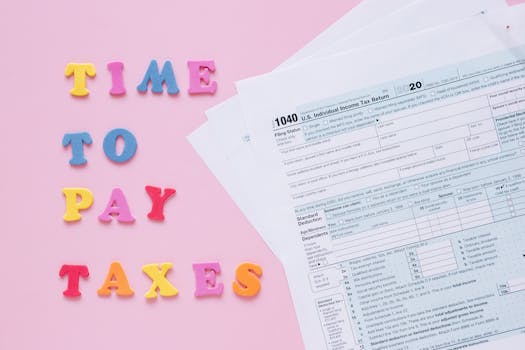 Photo: Leeloo The First / Pexels
Navigating the Post-Submission Phase and Maintaining Compliance
 Photo: Leeloo The First / Pexels
Common Pitfalls and Expert Tips for a Smooth Application
 Photo: Gustavo Fring / Pexels
Comparison
| Feature | Form 1023 (Standard) | Form 1023-EZ (Streamlined) | State Nonprofit Incorporation |
|---|---|---|---|
| Purpose | Federal 501(c)(3) Tax Exemption | Federal 501(c)(3) Tax Exemption | Legal Entity Recognition |
| Eligibility | Most organizations | Gross receipts < $50k/year, assets < $250k | All organizations |
| Complexity | High (extensive documentation) | Low (self-certification) | Medium (state-specific forms) |
| Cost (IRS fee) | $600 (subject to change) | $275 (subject to change) | Varies by state (e.g., $30-$300) |
| Processing Time | 3-12 months (or more) | 1-3 months | Days to weeks |
| Required Documents | Articles, Bylaws, financials, detailed activities | Articles, Bylaws (less detail), eligibility worksheet | Articles of Incorporation |
| Annual Filing | Form 990 (various versions) | Form 990 (various versions) | State annual reports |
What Readers Say
"This guide was a lifesaver for understanding how to get nonprofit status IRS! The breakdown of Form 1023 versus 1023-EZ was incredibly clear, helping us choose the right path and save months of effort. Highly recommend for any new nonprofit."
Sarah J. · Austin, TX"We were overwhelmed by the IRS requirements, but this article simplified everything. The step-by-step approach to how to get nonprofit status IRS made the process manageable, and we felt confident submitting our application."
David M. · Chicago, IL"Thanks to the detailed tips on avoiding common pitfalls, our application for how to get nonprofit status IRS was approved without a single RFAI! We followed the advice on documentation precisely, and it paid off immediately."
Maria P. · Miami, FL"While comprehensive, a few sections were quite dense. However, the information on maintaining compliance after approval was invaluable and something many guides overlook. It's a solid resource for long-term planning."
Robert L. · Seattle, WA"As a small community group, we used the Form 1023-EZ route. This article provided exactly what we needed to ensure we qualified and completed the application correctly. Our determination letter arrived faster than we expected!"
Emily R. · Denver, COFrequently Asked Questions
What is the most crucial first step when considering how to get nonprofit status IRS?
The most crucial first step is to clearly define your organization's mission and ensure it aligns with one of the IRS's exempt purposes (e.g., charitable, educational, religious). You must also legally incorporate your organization at the state level before applying for federal tax-exempt status. This foundational work sets the stage for all subsequent federal filings.
Is state nonprofit incorporation the same as federal 501(c)(3) status?
No, they are distinct. State nonprofit incorporation legally establishes your organization as a separate entity within your state. Federal 501(c)(3) status, granted by the IRS, provides federal income tax exemption and allows donors to deduct contributions. State incorporation is a prerequisite for applying for federal 501(c)(3) status.
How do I choose between Form 1023 and Form 1023-EZ?
You should use Form 1023-EZ if your organization projects annual gross receipts of $50,000 or less for the next three years and has total assets of $250,000 or less. Otherwise, you must use the full Form 1023. Always consult the IRS eligibility worksheet for Form 1023-EZ to ensure your organization qualifies.
How much does it cost to get nonprofit status from the IRS?
The IRS user fee for Form 1023 is currently $600, and for Form 1023-EZ, it is $275 (fees are subject to change). In addition to IRS fees, you will incur state incorporation fees, and potentially costs for legal or accounting assistance, which can vary widely.
What happens if my Form 1023 application is denied?
If your Form 1023 application is denied, the IRS will send a letter explaining the reasons. You typically have the right to appeal the decision within a certain timeframe by providing additional information or clarification. It is highly recommended to seek professional legal counsel if your application is denied to understand your options.
Who should consider applying for how to get nonprofit status IRS?
Any organization primarily engaged in charitable, educational, religious, scientific, literary, public safety testing, or prevention of cruelty to children or animals activities, that wishes to be exempt from federal income tax and receive tax-deductible contributions, should consider applying for 501(c)(3) status.
What are the biggest risks of not maintaining compliance after getting nonprofit status?
The biggest risk is the automatic revocation of your 501(c)(3) status for failing to file Form 990 for three consecutive years. Other risks include penalties, loss of public trust, and potential legal action if your organization engages in prohibited activities like private inurement or political campaigning.
Are there any upcoming changes to the IRS nonprofit application process?
The IRS periodically updates its forms, instructions, and processing procedures. While no major structural overhaul is imminent, staying informed by regularly checking the IRS website (irs.gov) for the latest versions of forms and publications is always recommended to ensure compliance with current requirements.
Embarking on the journey to secure 501(c)(3) status for your organization is a significant undertaking, but with careful planning and diligent execution, it's an achievable goal. This comprehensive guide on how to get nonprofit status IRS provides the roadmap you need. Take the first step today and transform your vision into a recognized force for good.