✓ Grant funding is a cornerstone of sustainability for many nonprofits.
✓ Effective grant writing requires a blend of persuasive communication and strategic planning.
✓ Online courses offer flexible, accessible, and often more affordable training options.
✓ A well-crafted grant proposal can secure significant resources, impacting community programs.
How It Works
1
Assess Your Needs
Determine your current grant writing skill level and your organization's specific funding goals. This helps in selecting the most appropriate course content.
2
Research Course Options
Explore various online providers, comparing curriculum, instructors' expertise, cost, and reviews. Look for courses tailored to nonprofit needs.
3
Enroll and Engage
Sign up for your chosen course and actively participate in modules, assignments, and discussions. Apply learned concepts to real-world scenarios.
4
Apply and Secure Funding
Utilize your newfound skills to identify suitable grant opportunities and craft compelling proposals. Celebrate your organization's increased funding success.
Why Online Grant Writing Training is Essential for Nonprofits
Photo: RDNE Stock project / Pexels
In the dynamic landscape of nonprofit operations, securing consistent and substantial funding remains a perennial challenge. While individual donations and fundraising events play crucial roles, grant funding often provides the significant, multi-year support necessary for sustained program growth and innovation. However, the world of grants is highly competitive, requiring a specialized skill set that many nonprofit professionals may not inherently possess. This is where nonprofit grant writing courses online become not just beneficial, but truly essential.
Online training offers unparalleled flexibility, a critical factor for busy nonprofit staff who often juggle multiple responsibilities. Unlike traditional in-person workshops that demand fixed schedules and travel, online courses can be accessed anytime, anywhere, fitting seamlessly into diverse work-life rhythms. This accessibility democratizes high-quality grant writing education, making it available to organizations regardless of their geographic location or budget constraints for travel. Furthermore, many online platforms allow for self-paced learning, enabling participants to absorb complex concepts at their own speed, revisiting modules as needed to solidify their understanding of nonprofit funding strategies.
The curriculum of a comprehensive online grant writing course typically covers a broad spectrum of topics, from understanding the grant lifecycle and identifying suitable funders to crafting compelling narratives and developing realistic budgets. Participants learn how to deconstruct grant requests for proposals (RFPs), effectively communicate their organization's mission and impact, and articulate a clear plan for project implementation and evaluation. These courses often include practical exercises, templates, and even opportunities for peer review or instructor feedback on draft proposals, transforming theoretical knowledge into actionable skills. The emphasis is often on strategic thinking – not just writing, but understanding the funder's perspective, building relationships, and positioning the nonprofit for long-term success.
Beyond the technical aspects of writing, these courses often delve into the ethical considerations of grant seeking, compliance requirements, and the importance of stewardship – building lasting relationships with funders. They teach participants to view grant writing as a strategic component of overall fundraising, rather than an isolated task. For small and emerging nonprofits, investing in an online grant writing course can be a game-changer, equipping them with the tools to compete with larger, more established organizations for crucial resources. For larger organizations, it can serve as a professional development opportunity for existing staff, ensuring their skills remain sharp and up-to-date with evolving philanthropic trends. Ultimately, by empowering nonprofit professionals with expert grant writing capabilities, these online courses directly contribute to the sustainability, impact, and mission fulfillment of organizations dedicated to public good.
Key Components of Effective Online Grant Writing Curricula
Photo: RDNE Stock project / Pexels
When evaluating nonprofit grant writing courses online, it's crucial to look beyond surface-level descriptions and delve into the specifics of their curriculum. A truly effective program will cover a comprehensive range of topics, ensuring graduates are well-equipped for every stage of the grant-seeking process. One of the foundational elements is understanding the 'ecosystem' of grant funding. This includes learning about different types of funders (foundations, corporations, government agencies), their motivations, and how to effectively research and identify prospects that align with your organization's mission and programs. A good course will teach you how to use online databases and other resources to pinpoint suitable opportunities, moving beyond generic searches to targeted identification.
Another critical component is mastering the art of proposal development. This isn't just about filling out forms; it's about crafting a compelling narrative that resonates with funders. Courses should break down the typical sections of a grant proposal: executive summary, statement of need, project description, goals and objectives, methodology, evaluation plan, organizational capacity, and sustainability. Each section requires a specific approach, and effective curricula will provide detailed guidance, examples, and templates for each. For instance, the 'statement of need' section requires data-driven evidence and a persuasive description of the problem your nonprofit addresses, while the 'project description' must clearly articulate the solution and its anticipated impact.
Budget development and financial storytelling are also indispensable. Grant proposals are not just about words; they require a clear, realistic, and justified budget. An excellent course will teach participants how to create detailed project budgets, distinguish between direct and indirect costs, understand matching fund requirements, and articulate the financial viability and impact of their proposed project. This often involves learning how to present financial information in a way that is transparent, credible, and aligns with the funder's expectations. Many courses also emphasize the importance of writing with clarity, conciseness, and persuasive language, often incorporating modules on storytelling techniques to make proposals more engaging and memorable.
Finally, effective online grant writing courses will address post-award management and stewardship. Winning a grant is only half the battle; reporting, compliance, and building a long-term relationship with the funder are equally important for future funding success. This includes understanding reporting requirements, managing grant funds ethically, and demonstrating accountability and impact. Some advanced courses might even touch upon cultivating donor relationships, understanding legal aspects of grants, and developing a comprehensive fundraising strategy that integrates grant seeking with other revenue streams. The depth and breadth of these components are what differentiate a basic overview from a truly transformative educational experience.
Choosing the Right Online Grant Writing Course for Your Nonprofit
Photo: ROMAN ODINTSOV / Pexels
Navigating the myriad of nonprofit grant writing courses online can be daunting. To make an informed decision, it's essential to consider several factors that align with your specific learning style, organizational needs, and budget. The first step is to assess the instructor's credentials. Look for courses taught by experienced grant professionals, certified grant writers, or individuals with a proven track record of securing significant funding for nonprofits. Their real-world experience often translates into practical advice, insider tips, and a deeper understanding of funder expectations that theoretical knowledge alone cannot provide.
Next, examine the course format and delivery. Do you prefer self-paced modules that you can complete on your own schedule, or do you thrive in a more structured environment with live webinars and interactive sessions? Some courses offer a blended approach, combining asynchronous learning with synchronous engagement. Consider whether the course includes practical assignments, such as drafting sections of a grant proposal, and if it offers opportunities for feedback. Constructive feedback, whether from an instructor or peers, is invaluable for refining your writing and strategic thinking skills. Hands-on application is key to internalizing the lessons.
Another crucial aspect is the curriculum's relevance and depth. Does the course cover the types of grants your organization typically seeks (e.g., government, foundation, corporate)? Does it address the specific challenges faced by your organization's size or mission? Some courses are general, while others specialize in areas like federal grants, arts grants, or environmental grants. Look for modules that cover research strategies, proposal writing for different funder types, budget development, and grant reporting. A comprehensive course will also include templates, checklists, and resources that you can adapt and use immediately in your work.
Finally, consider the cost and value proposition. Online courses range widely in price, from free introductory modules to multi-thousand-dollar certification programs. Evaluate what's included in the price: course materials, instructor access, certification, and post-course support. While a higher price doesn't always guarantee better quality, extremely low-cost options might lack depth or personalized feedback. Read reviews and testimonials from past participants to gauge the course's effectiveness and the support provided. A good course should offer a strong return on investment by significantly improving your organization's chances of securing funding, thereby far outweighing the initial cost. Remember, investing in professional development for grant writing is an investment in your nonprofit's future sustainability and impact.
Common Pitfalls in Grant Writing and How Online Courses Help Avoid Them
Photo: Kevin Malik / Pexels
Even seasoned nonprofit professionals can fall prey to common grant writing mistakes that hinder funding success. Online grant writing courses are specifically designed to highlight these pitfalls and equip learners with strategies to circumvent them, significantly increasing their chances of securing critical funds. One of the most frequent errors is failing to thoroughly research the funder. Many nonprofits apply for grants that are not a good fit, wasting valuable time and resources. Online courses emphasize the importance of meticulous funder research, teaching techniques to identify grantmakers whose mission, funding priorities, and geographic focus align perfectly with the applicant's project. This strategic matching is often the first step to success.
Another major pitfall is a poorly articulated statement of need. Grant proposals often fail because they don't convincingly demonstrate a clear, urgent problem that the nonprofit is uniquely positioned to solve. Courses teach participants how to use compelling data, anecdotes, and expert testimony to paint a vivid picture of the community's needs and the gap your organization fills. They guide learners in moving beyond general statements to specific, measurable evidence of the problem. Similarly, a vague project description or ill-defined objectives can doom a proposal. Effective online training provides frameworks for developing SMART (Specific, Measurable, Achievable, Relevant, Time-bound) goals and objectives, ensuring that the proposed activities are logical, impactful, and clearly tied to addressing the identified need.
Lack of a clear evaluation plan is also a common misstep. Funders want to see how their investment will make a difference and how that difference will be measured. Online courses dedicate significant time to teaching participants how to design robust evaluation methodologies, define key performance indicators (KPIs), and plan for data collection and reporting. This not only demonstrates accountability but also showcases the nonprofit's commitment to impact. Additionally, many organizations struggle with budget justification; simply listing expenses isn't enough. Courses provide guidance on creating detailed, line-item budgets that are realistic, clearly tied to project activities, and accompanied by persuasive narratives explaining each cost.
Finally, a common mistake is neglecting the 'organizational capacity' section or failing to build a relationship with the funder. Online courses often cover how to effectively showcase your nonprofit's strengths, experience, and leadership, instilling confidence in potential funders. They also stress the importance of proactive communication, relationship-building, and thoughtful stewardship even before a proposal is submitted. By systematically addressing these and other common errors, nonprofit grant writing courses online empower individuals to craft polished, persuasive, and ultimately successful grant applications that drive their organization's mission forward. They transform aspiring grant writers into strategic fundraisers.
Comparison
Feature
Grant Writing USA (Online)
The Grant Training Center (Virtual)
University Extension Programs
Format
Live Online via Zoom
Live Online via Zoom
Self-paced or Live Online
Duration
2-3 Days (Intensive)
2-5 Days (Varies by course)
Weeks to Months
Cost Range
$600 - $800
$500 - $1200+
$300 - $2000+
Certification Offered
Certificate of Completion
Certificate of Completion
Varies (some offer certificates)
Direct Funder Access
✗
✗
✗
Interactive Q&A
✓
✓
Varies
Peer Review Opportunities
Limited
Limited
Sometimes
Beginner Friendly
✓
✓
✓
What Readers Say
★★★★★
"The online grant writing course I took was incredibly detailed and practical. It demystified the entire process, from finding funders to crafting a compelling budget. Our small nonprofit just secured its first major foundation grant, and I attribute it directly to this training."
Sarah Chen · Austin, TX
★★★★★
"As a new development director, I felt overwhelmed by grant applications. This course provided clear templates and step-by-step guidance. The instructor's feedback on my practice proposal was invaluable and gave me the confidence to apply for more competitive grants."
David Rodriguez · Miami, FL
★★★★★
"Within six months of completing an online grant writing course, our environmental nonprofit saw a 40% increase in successful grant applications. The modules on impact measurement and storytelling were particularly impactful for our proposals."
Emily White · Seattle, WA
★★★★★
"The course content was excellent, though I would have appreciated more live Q&A sessions. Nevertheless, the self-paced format allowed me to fit the learning around my busy schedule, and the resources provided are top-notch for future reference."
Mark Johnson · Denver, CO
★★★★★
"Our arts organization needed to diversify its funding. The online grant writing course specifically covered strategies for arts and culture grants, helping us understand the unique requirements and language. It's been a game-changer for our annual funding goals."
Jessica Lee · Chicago, IL
Frequently Asked Questions
What should I look for in nonprofit grant writing courses online?
When selecting an online course, prioritize experienced instructors, a comprehensive curriculum covering funder research, proposal components, budget development, and evaluation, and opportunities for practical application and feedback. Also, consider the course format (self-paced vs. live) and its cost-effectiveness relative to your organization's needs and budget.
Are online grant writing courses effective for beginners?
Yes, many online grant writing courses are designed with beginners in mind, starting with foundational concepts and gradually building up to more complex strategies. They often provide templates and step-by-step guidance that are ideal for those new to grant seeking, making the process less intimidating and more accessible.
How long does it take to complete a typical online grant writing course?
The duration varies significantly. Self-paced courses can take anywhere from a few weeks to several months, depending on the learner's schedule and the course's depth. Intensive live online courses might span 2-5 days, while university-based programs could run for 6-12 weeks with weekly sessions.
What is the typical cost of nonprofit grant writing courses online?
Costs range widely, from free introductory webinars and courses on platforms like Coursera (often with optional paid certificates) to several hundred or even a few thousand dollars for comprehensive, instructor-led, or university-certified programs. The price often reflects the depth of content, level of interaction, and credentials offered.
How do online courses compare to in-person grant writing workshops?
Online courses offer greater flexibility, often lower costs, and accessibility from any location. In-person workshops provide direct networking opportunities and immediate, real-time interaction. Both can be effective; the choice depends on your learning style and logistical constraints, with online options generally being more convenient for busy nonprofit professionals.
Who should consider taking nonprofit grant writing courses online?
These courses are ideal for anyone involved in nonprofit fundraising, including executive directors, program managers, development staff, board members, and even volunteers looking to contribute meaningfully. They are particularly beneficial for small and emerging nonprofits without dedicated grant writers, or for larger organizations seeking to upskill their existing team.
Will an online course help me find actual grant opportunities?
While courses primarily teach you *how* to write grants, most comprehensive programs include modules on grant research strategies and identifying suitable funders. They equip you with the skills and tools to proactively search for opportunities, rather than providing a list of open grants.
What are the future trends in grant writing that online courses might cover?
Future trends often include an increased focus on impact measurement and data storytelling, equity-focused funding, collaborative grant applications, and the use of technology (AI tools for research, project management software). Leading online courses are increasingly integrating these evolving best practices into their curricula.
Empower your nonprofit with the knowledge and skills to secure vital funding. Explore the best nonprofit grant writing courses online today and take the definitive step towards a more sustainable and impactful future for your organization and the communities you serve.

 Photo: RDNE Stock project / Pexels
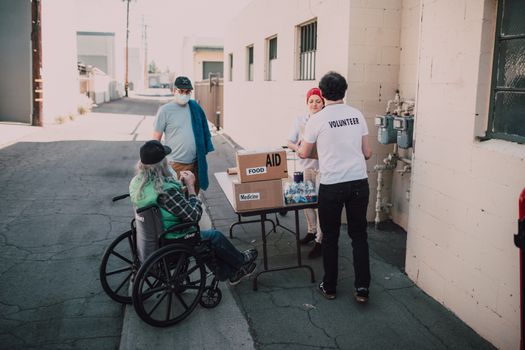 Photo: RDNE Stock project / Pexels
 Photo: ROMAN ODINTSOV / Pexels
 Photo: Kevin Malik / Pexels